In winter, the valley becomes a speedriding playground. This page will cover the specifics of winter flying: ski areas, routes, sharing the slopes with skiers, and conditions.
Plan de l'Aiguille
CommittingThe iconic spot of the valley, reached via the Aiguille du Midi cable car. Big vertical drop, varied terrain. Watch out for the old cable car cables leading up to the para station, as well as the cable car cables at the Plan de l’Aiguille station — spot them clearly before flying.
- Takeoff
- 2 310 m
Facing Mont Blanc, a spot also busy with paragliders. Watch for air traffic and mind the Le Savoy landing rules.
- Takeoff
- 2 525 m
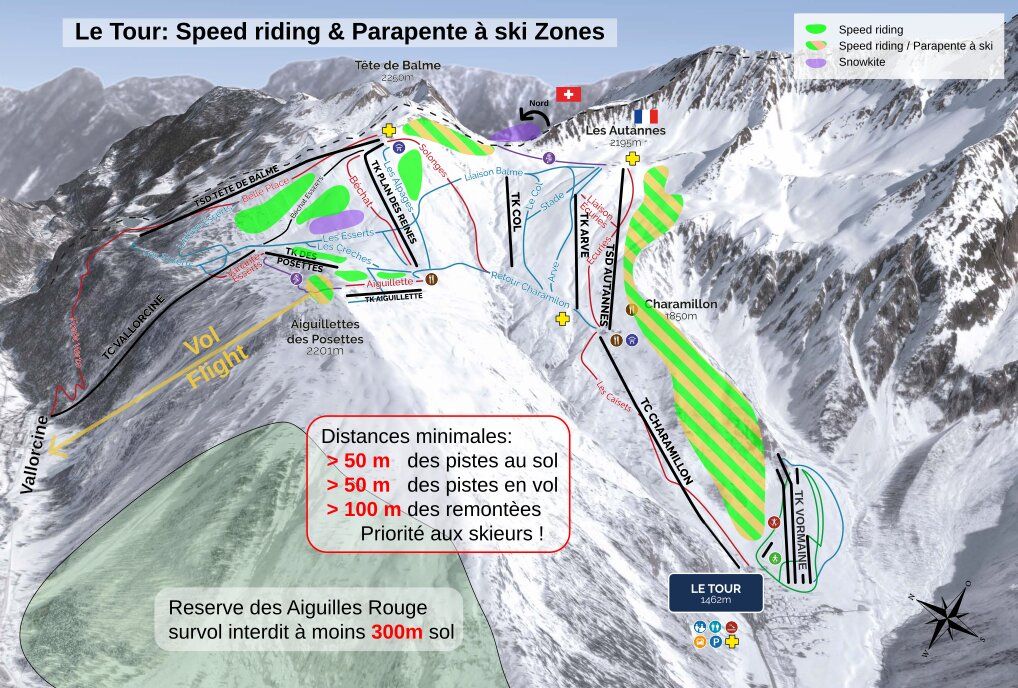
Le Tour, Col de Balme
ModerateThe Balme ski area, a favoured winter speedriding learning ground. Wide, consistent slopes. Caution: a ski run crosses the line, do not fly over it.
- Takeoff
- 2 200 m

Le Tour, Les Posettes
CommittingThe Posettes run, on the Vallorcine side. Watch the landing: a cross-country ski track runs right alongside it, landing on the track is forbidden.
- Takeoff
- 2 200 m
Le Tour, Les Autannes
ModerateThe Autannes run, landing at La Vormaine.
- Takeoff
- 2 200 m
A committing descent down the north face of the Aiguille du Midi, for experienced pilots only. Glaciated high-mountain terrain with major exposure.
- Takeoff
- 3 842 m
⚠️ Minimum required gear: glacier equipment (harness, crampons, ice screw). Any fall can be fatal.
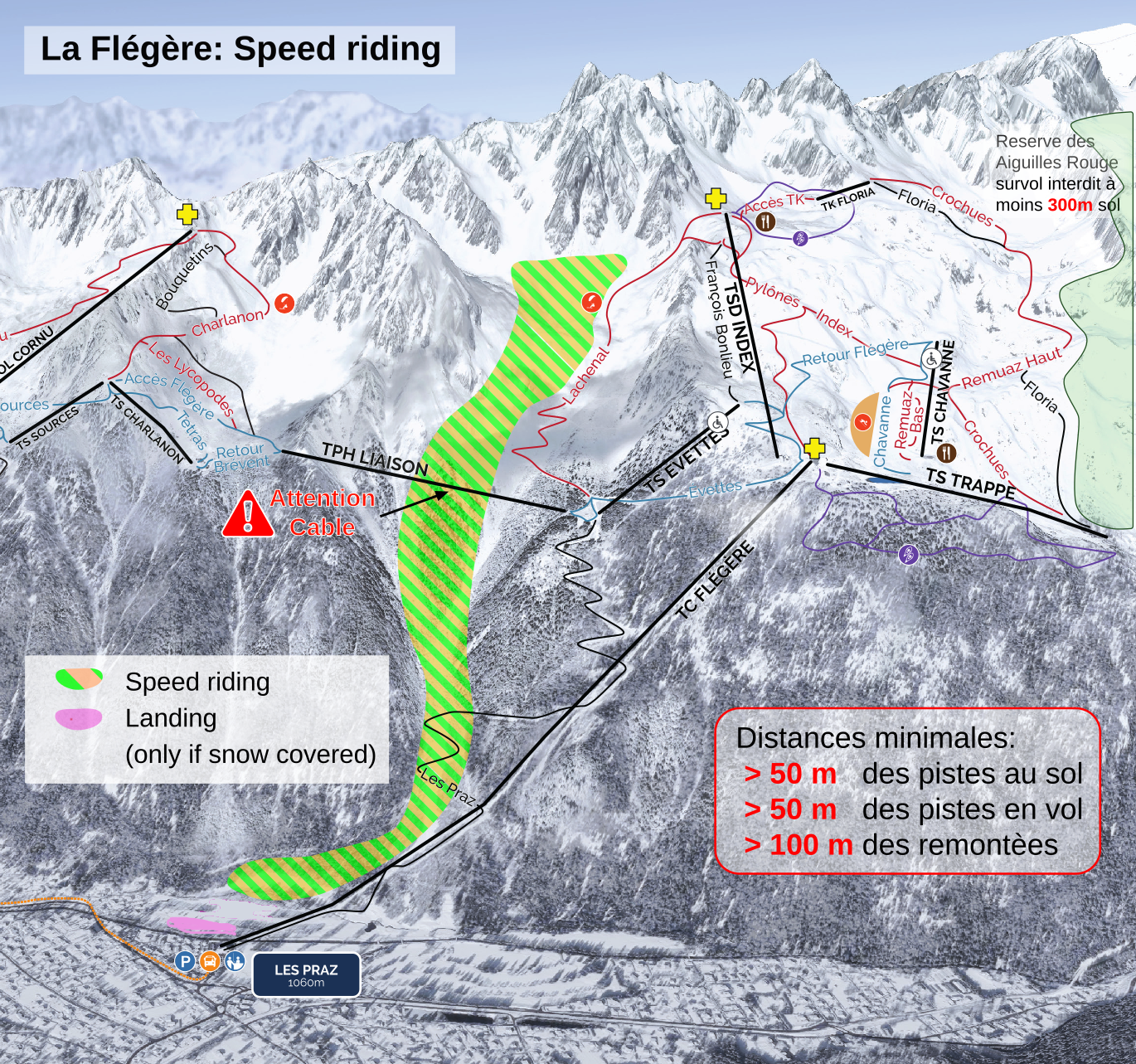
A ski area facing Mont Blanc, reached via the Flégère gondola. A good balance of slope and consistency for speedriding. Watch out for the gondola cables, spot them clearly before flying.
- Takeoff
- 1 900 m

Landing on the Mer de Glace. Keep good margins around the flatter sections, which are scattered with crevasses. This is more of a speedflying descent with a ski takeoff, reserved for pilots experienced on glaciated terrain.
- Takeoff
- 3 300 m
⚠️ Minimum required gear: glacier equipment (harness, crampons, ice screw). Any fall can be fatal.